
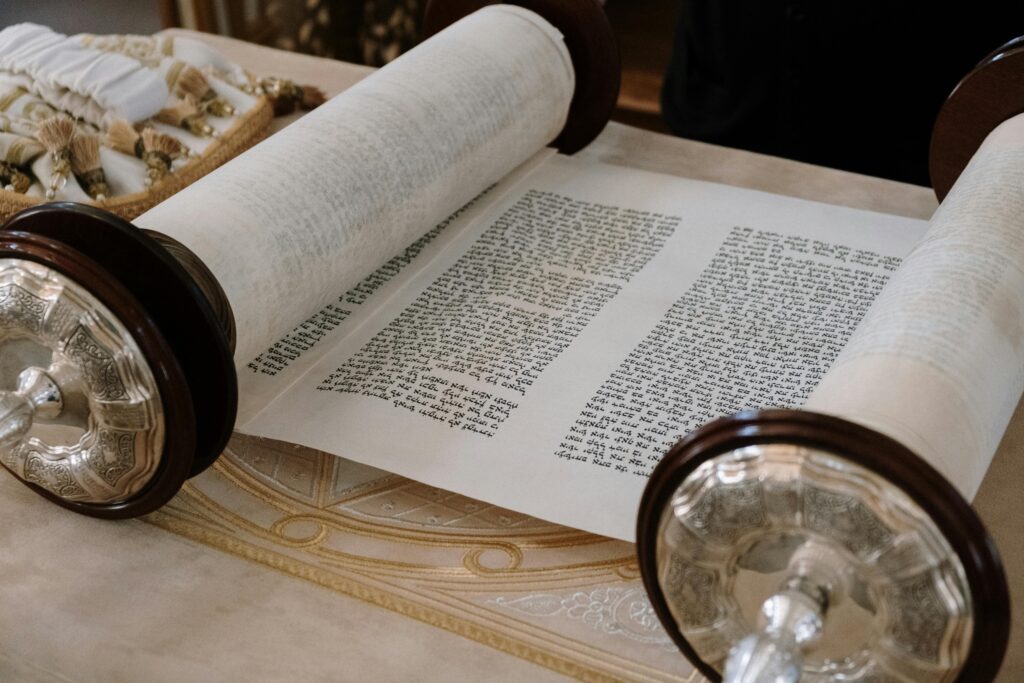
When Christians hear the word Torah, they may think of a list of rules. But the Hebrew word is better understood broadly as teaching or instruction. The Torah is also a story—of creation, covenant, deliverance, wilderness, and a people learning how to live before God.
What books make up the Torah?
- Genesis (Bereshit): creation, the ancestors of Israel, and the beginnings of covenant.
- Exodus (Shemot): slavery, liberation, Sinai, and the tabernacle.
- Leviticus (Vayikra): holiness, priesthood, worship, and communal life.
- Numbers (Bamidbar): the wilderness journey, rebellion, and faithfulness.
- Deuteronomy (Devarim): Moses’ instruction as Israel prepares to enter the land.
These five books are also called the Pentateuch. In Jewish tradition, they occupy the first section of the Tanakh—Torah, Prophets (Nevi’im), and Writings (Ketuvim).
Why does Torah matter for reading Jesus?
Jesus, his earliest followers, and many of the audiences described in the Gospels lived in a world shaped by Israel’s Scriptures. When Jesus discusses the Shema, the Sabbath, the commandments, Passover, or the temple, the Torah forms part of that conversation. The New Testament frequently assumes knowledge of stories Christians first encounter in Genesis through Deuteronomy.
In Matthew 22:37–40, for instance, the commandments to love God and neighbor draw directly from Deuteronomy 6:5 and Leviticus 19:18. These are not religious ideas invented independently in the first century; they belong to the scriptural heritage of Israel.
Do Jews and Christians read the Torah in exactly the same way?
No. Jewish traditions read Torah within an ongoing life of covenant, interpretation, prayer, and practice. Christian traditions read the same books within their biblical canon and in relationship to Jesus and the New Testament. These perspectives overlap in significant ways but are not interchangeable. Understanding the Jewish reading on its own terms is essential to respectful dialogue.
Three reading habits for Christians
- Read the entire narrative before isolating a commandment or promise.
- Ask what the passage meant for Israel and its original setting before applying it to the church today.
- Distinguish what the text explicitly says from later Jewish or Christian interpretation.